Agency News
October 15, 2026 · 11 min read
A healing wound can change from day to day. Some changes are expected. Others require prompt attention.
For families seeking in home wound care Wisconsin, knowing what to watch for can help prevent a small concern from becoming a serious infection. This guide is for patients, family caregivers, hospitals, healthcare providers, and discharge planners in Waukesha, Milwaukee, Racine, Jefferson, Ozaukee, and Washington counties.
This information does not replace instructions from your physician or wound-care nurse. When your concern is new, worsening, or difficult to judge, call your healthcare provider.
Your healing wound may have mild pinkness, slight swelling, tenderness, or a small amount of clear fluid during the early stages. These signs should gradually stabilize or improve.
Your wound should not become increasingly painful, hot, swollen, or red. Redness that spreads beyond the wound is more concerning than a small area of stable pinkness at the edges.
Your drainage may also change during healing. A small amount of clear or lightly blood-tinged fluid can occur, depending on the wound and treatment. Cloudy, thick, yellow, green, white, or brown drainage is not something to ignore.
Your best guide is the overall trend. Is the wound improving, or is it becoming more painful, more swollen, or harder to manage?
Contact your nurse, surgeon, primary care clinician, or home health agency promptly if you notice:
A fever of 100.4°F or higher may be important, especially when it occurs with worsening wound symptoms. However, do not rely on fever alone. Older adults may have a less noticeable fever or a lower baseline temperature.
Your older family member may instead develop unusual sleepiness, new confusion, weakness, poor appetite, dizziness, faster breathing, or a sudden decline in daily function. These changes deserve prompt medical attention when they occur alongside a worsening wound.

Aging skin is often thinner, drier, and less resilient. A small bump, surgical incision, pressure area, or scrape may take longer to close and may be more vulnerable to bacteria.
Several common health conditions can also delay healing:
Some medications can affect healing, skin strength, immune response, or bleeding risk. Never stop a prescribed medication without speaking with the prescribing clinician. Instead, make sure your nurse and physician have an accurate medication list.
Your family’s observations matter. A person with numbness may not feel increasing pain. A person with memory loss may not report drainage or tenderness. A caregiver may notice the change first.
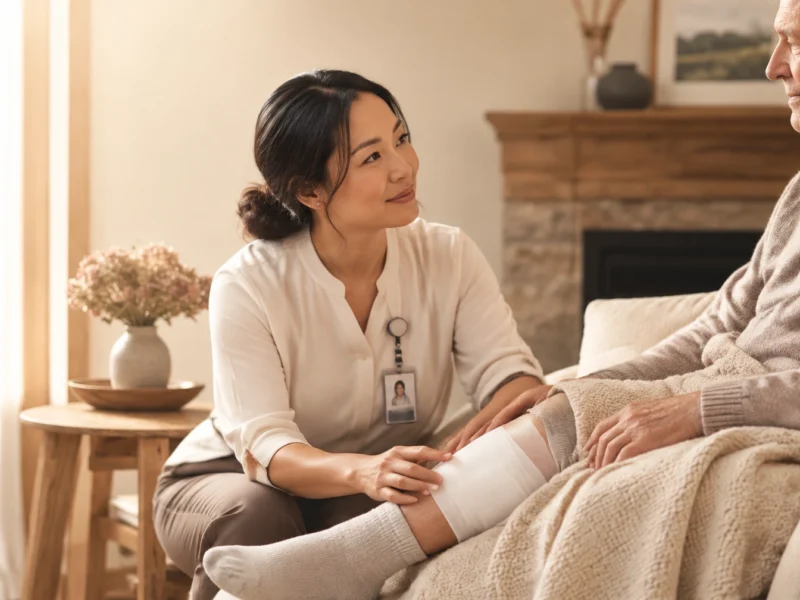
Your Abia Home Health RN brings clinical assessment and skilled wound care into the home. The visit is more than changing a bandage.
Your nurse may:
Abia’s RN-led care coordination helps connect the patient, family, physician, hospital team, and home health staff. That communication is especially important after surgery, hospitalization, or a complicated discharge.
Learn more about Abia Home Health skilled nursing and wound-care services.
Small, consistent steps support safer healing.
Wash your hands. Clean your hands before and after touching the dressing, wound area, or supplies. Family caregivers should do the same.
Keep the dressing dry. Follow the specific bathing and dressing instructions provided by your nurse. If the dressing becomes wet, loose, dirty, or saturated, call for guidance rather than improvising.
Follow the care plan. Use only the cleaning products, ointments, dressings, and frequency recommended by your clinician. Hydrogen peroxide, rubbing alcohol, and other products can damage healing tissue unless specifically ordered.
Protect the area. Avoid rubbing, scratching, picking, or removing a scab. Do not squeeze a wound, pop a blister, or attempt to drain an abscess.
Support nutrition. Healing requires energy, fluids, and nutrients. Include protein-rich foods such as eggs, yogurt, fish, poultry, beans, lentils, or tofu when appropriate for the patient’s diet. Ask the physician or dietitian for guidance if kidney disease, swallowing concerns, or dietary restrictions are present.
Reduce pressure. If the wound is related to limited mobility or pressure, follow the nurse’s instructions for repositioning, cushions, offloading, and safe movement.
Track changes. Write down new pain, drainage, odor, fever, or other symptoms. Photos may help your clinical team monitor progress, but take and share them only through an approved, secure process.

Some wound problems cannot wait for a scheduled visit.
Call 911 if the patient has:
Go to the emergency room immediately for a wound that is rapidly worsening, severe pain that seems far greater than the wound appears, rapidly spreading swelling or redness, purple or black skin, blisters, numbness, crackling under the skin, or gray and foul-smelling drainage.
Emergency evaluation is also important for a deep or penetrating wound, exposed bone or tendon, an animal or human bite, a dirty puncture wound, a retained foreign object, or an injury near the face, chest, abdomen, genitals, or a major blood vessel.
Do not wait for a home health visit when emergency symptoms are present. If the person is too weak, confused, short of breath, or unsafe to transport, call 911.
Wound care can feel overwhelming, especially after a hospital stay. Your family should not have to manage every question alone.
Abia Home Health provides RN-led skilled nursing in the comfort of home, with physician coordination, patient education, dressing support, and a personal, unhurried approach. Our local Wisconsin nurses serve patients across Waukesha, Milwaukee, Racine, Jefferson, Ozaukee, and Washington counties.
We offer same-day admission response for appropriate referrals and urgent coordination. Families, hospitals, healthcare providers, and discharge planners can contact Abia Home Health or refer a patient.
Call 414-509-1177 for a care consultation or same-day admission discussion. For referrals, email referrals@abiahomehealth.com or use the secure fax line at 414-413-2009.
A small, stable amount of pinkness can occur during early healing. It should not spread or become increasingly warm, swollen, painful, or tender. Ask your nurse if you are unsure.
No. Older adults may have little or no fever during an infection. New confusion, unusual sleepiness, weakness, worsening drainage, increasing pain, or spreading redness can also be warning signs.
Only follow the instructions provided by your physician or home health nurse. Use the approved supplies and technique. If the dressing is wet, loose, dirty, or saturated, call your care team for direction.
Abia provides same-day response for referrals and offers after-hours coordination for urgent needs. Call 414-509-1177 to discuss your situation and next steps.
Abia Home Health serves Waukesha, Milwaukee, Racine, Jefferson, Ozaukee, and Washington counties. Visit the service area and skilled nursing information or contact the team directly.
General education only. Wound care decisions should follow the patient’s physician-ordered plan. In an emergency, call 911.