Agency News
October 1, 2026 · 9 min read
Your loved one deserves to feel comfortable, respected, and in control at home.
For many seniors in Milwaukee, Waukesha, Racine, Jefferson, Ozaukee, and Washington counties, everyday routines become harder with age, illness, or recovery. Bathing may require extra support. Dressing may take longer. Preparing meals or moving between rooms may feel exhausting.
A home health aide can provide practical help without taking away independence. When aide support is coordinated with RN-led skilled nursing, your family receives both compassionate personal care and professional health oversight.
That combination helps seniors remain at home with greater confidence and dignity.
Home health aides assist with activities of daily living. The goal is not to take over. The goal is to provide the right amount of support so your loved one can participate safely and maintain familiar routines.
Your home health aide may help with:
Each visit should reflect your loved one’s preferences. Some seniors need hands-on assistance. Others need only setup, supervision, or a steady presence nearby.
A respectful aide asks before helping, explains what will happen, and encourages the senior to do whatever they can independently.
Personal care can feel private. It can also feel frustrating when a loved one must ask for help with routines they managed alone for decades.
Your caregiver should recognize that bathing, grooming, and dressing are not merely tasks. They are connected to identity, confidence, culture, and personal choice.
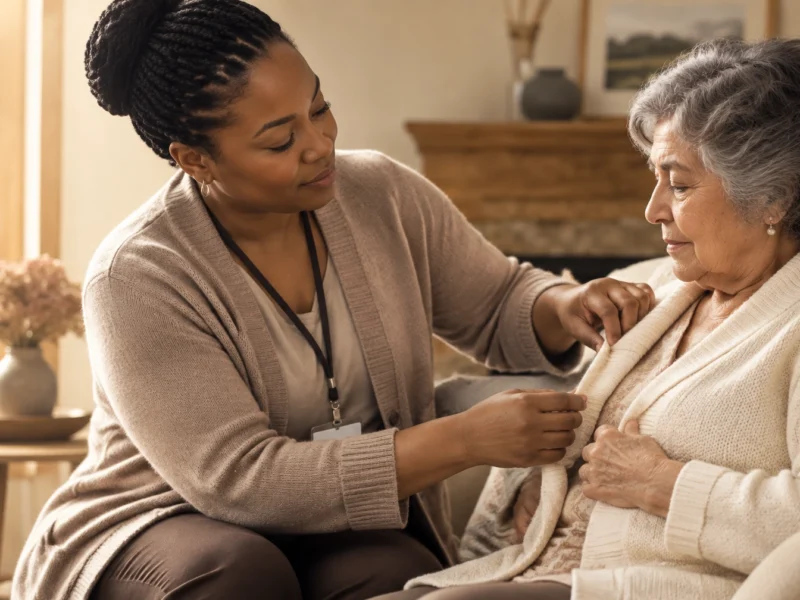
A compassionate home health aide in Milwaukee approaches these moments with patience. The aide can prepare clothing, organize bathing supplies, or assist with a transfer while protecting privacy. Your loved one remains part of the decision-making process.
Small choices matter:
These choices help preserve autonomy. Care should support independence, not replace it.

A home health aide can make daily routines more manageable in several practical ways.
Your aide can help prepare the bathroom, arrange towels and personal items, and provide support during bathing. Assistance may include washing, drying, hair care, shaving, oral care, and applying basic personal products.
The aide can also help your loved one choose clothing that is comfortable and easy to manage. Adaptive garments, well-fitting shoes, and simple fasteners can make dressing less frustrating.
The approach should remain calm and private. Authorized caregivers only. No unapproved visitors or unauthorized access to personal care information is permitted.
Moving from a bed to a chair or from a living room to the kitchen can be challenging after surgery, illness, or a change in strength.
Your aide may provide support with:
Aides follow the established plan of care and communicate concerns to the supervising clinical team. They do not improvise medical treatment or perform tasks outside their training.
Meal support is about more than cooking. It can help your loved one maintain familiar routines, enjoy regular meals, and stay connected to daily life.
Depending on the care arrangement, an aide may help plan simple meals, prepare food, set the table, encourage fluids, and clean up afterward. Your loved one may still choose ingredients, season food, or participate in preparation.
For families managing dietary restrictions, the care team can help clarify what the nurse, physician, or dietitian has recommended. The aide then supports the routine within the authorized plan.
Personal care works best when it connects with the larger health plan.
Abia Home Health provides RN-led skilled home health services in Milwaukee and throughout Southeast Wisconsin. Our registered nurses coordinate with physicians and help organize care around each patient’s needs.
Skilled nursing may include wound care, IV therapy, post-surgical recovery support, chronic disease education, and clinical assessment. Home health aide services address the daily routines that help a person remain comfortable and engaged at home.
Together, these roles create a more complete picture.
Your aide may notice that your loved one is unusually tired, eating less, having difficulty with a familiar movement, or becoming more withdrawn. The aide can report those observations to the nursing team. The RN can then assess the change and communicate with the physician when appropriate.
This communication helps families avoid disconnected care. It also gives discharge planners and healthcare providers a reliable partner after a patient returns home.

Families often ask whether they need home care, home health, or both.
In general, aide support focuses on daily personal care and household routines. Skilled home health includes clinical services provided by licensed professionals under a physician-directed plan.
Some patients need one type of support. Others benefit from both.
Medicare explains that home health aide services are generally covered under the home health benefit only when the patient also receives qualifying skilled nursing or therapy services and meets other requirements. Personal care alone may not qualify for Medicare coverage. Review the official Medicare home health services guidance, and ask your provider to explain your specific coverage.
For families comparing options, Abia’s guide to home care versus home health offers additional context.
Your family may prefer a caregiver who understands the community and can respond promptly.
Abia Home Health serves patients and families in Milwaukee, Waukesha, Racine, Jefferson, Ozaukee, and Washington counties. Our local Wisconsin nurses and caregivers bring a personal, unhurried approach to each visit.
We understand that a home is not a facility. It is where your loved one keeps familiar belongings, follows personal routines, and shares family history. Care should fit respectfully into that environment.
For hospitals, healthcare providers, and discharge planners, local coordination can also make referrals more responsive. Our team prioritizes same-day admits when appropriate, helping patients begin care without unnecessary delays.
If you are searching for skilled nursing Waukesha, home health agencies Racine WI, or elderly home care Milwaukee, look for an agency that can explain exactly who will provide care, how the team communicates, and how quickly services can begin.
Before choosing a provider, ask:
Professional boundaries matter. Only authorized staff should enter the home for scheduled care. Patient records and care plans must remain restricted to approved individuals. A reputable agency should answer security and privacy questions directly.
You can also review Abia’s step-by-step guide to choosing home health care in Milwaukee.

The right support can change the daily experience of aging or recovery.
Your loved one may bathe with less stress, dress with greater confidence, enjoy a familiar meal, or move through the home with more reassurance. Your family may feel less pressure to coordinate every detail alone.
Home health aide services are not about limiting independence. They are about making independence more sustainable.
At Abia Home Health LLC, our RN-led team combines skilled nursing with compassionate personal care support. We treat patients like family, respect the home environment, and build care around the person, not just the diagnosis.
If your family needs home health care Milwaukee families can trust, contact Abia Home Health to discuss your loved one’s needs. Same-day admits may be available, and our local team is ready to help families and healthcare professionals across Southeast Wisconsin.