Agency News
August 17, 2026 · 10 min read
A fall can change a senior’s life in seconds. It can lead to a fracture, hospital stay, loss of independence, or fear of moving around the home.
For seniors in Southeast Wisconsin, fall prevention starts with practical support in the place where daily routines happen: home.
Your safety plan may include a nursing assessment, medication review, home modifications, mobility guidance, and help with personal care. Skilled home health services bring these pieces together with clinical oversight and compassion.
This support matters to several audiences:
A safer home begins with understanding individual risk.
An RN-led skilled nursing assessment looks beyond whether a patient has fallen before. The nurse considers balance, gait, strength, vision, blood pressure, footwear, cognition, medical history, and the way the patient moves through the home.
Your fall-risk assessment may include questions such as:
The CDC’s STEADI fall-prevention initiative encourages healthcare professionals to screen, assess, and intervene when older adults may be at risk. The approach includes evaluating medications, vision, mobility, blood pressure, and home hazards.
At Abia Home Health, an RN-led assessment also helps connect the patient’s daily needs with the physician’s plan of care.

Small changes can create a major difference.
Many household fall risks are easy to overlook. A loose rug may seem harmless until a walker catches its edge. A dim hallway may become dangerous during a nighttime bathroom trip. A cluttered walkway can turn a familiar room into an obstacle course.
Your home safety checklist should include:
A skilled nurse or home health aide can observe how a patient actually moves through the home. This real-world view may reveal risks that are not obvious during a brief office visit.
The CDC’s “Check for Safety” resources can also help families organize a room-by-room review.
Medication safety is fall prevention.
Some medications may cause dizziness, drowsiness, confusion, blurred vision, or changes in blood pressure. These effects can become more concerning when a senior takes several prescriptions, over-the-counter medicines, or supplements.
Your medication routine deserves careful attention after a hospital stay, new diagnosis, dosage change, or fall.
An RN may help by:
Medication should never be stopped or changed without direction from the prescribing provider. However, families should report new dizziness, unusual sleepiness, confusion, weakness, or repeated near-falls promptly.
Abia Home Health also provides guidance for families managing complex regimens. Our medication management for seniors resource explains why RN oversight can support safer, more organized care at home.
Confidence matters.
After a fall: or even a near-fall: many seniors become afraid to walk. That fear may lead to less activity, weaker muscles, and greater instability.
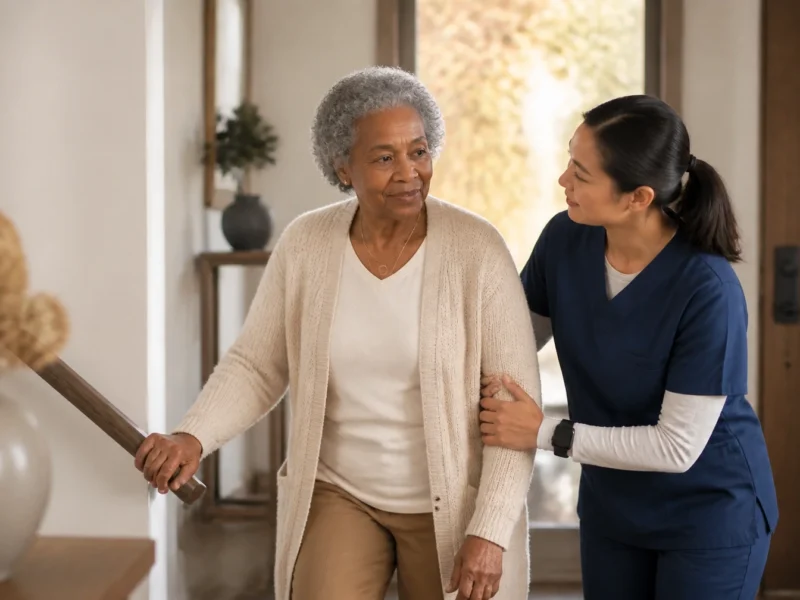
Your mobility plan should promote safe movement without rushing or pushing. Depending on the care plan, skilled nursing may coordinate with physical or occupational therapy providers, reinforce safe transfer techniques, and teach patients how to use mobility aids correctly.
Practical guidance may include:
A mobility aid must be fitted and used correctly. If a cane or walker feels unstable, the patient should ask a healthcare professional to check it.
Personal care affects balance.
Bathing, grooming, dressing, and toileting can all involve bending, reaching, standing, or stepping over thresholds. These activities may become especially difficult after surgery, illness, or a period of bed rest.
A home health aide Milwaukee families trust can provide support with:

Home health aide support does not replace skilled nursing. Instead, the services can work together. The RN evaluates clinical needs and coordinates the plan. The aide provides hands-on assistance with daily activities according to that plan.
This partnership can help a senior remain engaged in everyday life while reducing the pressure on family caregivers.
Risk changes after discharge.
The first days at home after hospitalization or surgery can be particularly vulnerable. A patient may be weaker than before, adjusting to new medications, managing pain, or learning to use a walker.
Your transition home should include clear answers:
For hospitals, discharge planners, and providers, early coordination can help prevent gaps in care. Abia Home Health offers skilled home health services Milwaukee, including RN-led care coordination, skilled nursing, medication support, wound care, IV therapy, and post-surgical recovery.
Same-day admits may also help families begin the next stage of care without an unnecessary delay, when ordered services and eligibility requirements are in place.
Everyone needs clear roles.
Fall prevention works best when the patient, family, physician, nurse, aide, and other providers share information. A simple plan can reduce confusion.
Your family safety plan should identify:
Family members should avoid lifting a fallen person unless there is immediate danger. If the person has severe pain, bleeding, a head injury, loss of consciousness, difficulty breathing, or cannot stand, call 911. Even when an injury is not obvious, notify the healthcare provider after a fall.
Wisconsin support is available.
The Wisconsin Department of Health Services fall-prevention resources highlight home safety, healthcare screening, and community-based prevention.
Families may also explore FallsFree Wisconsin screening guidance and the Wisconsin Institute for Healthy Aging’s Stepping On program. Stepping On is a multi-week program focused on strength, balance, home safety, vision, and medication awareness.
These resources can complement: not replace: individual medical guidance.
Your home deserves attention.
When comparing home health care Milwaukee, skilled home health services Milwaukee, home health aide Milwaukee, or elderly home care Milwaukee options, ask:
Abia Home Health LLC serves seniors and recovering patients across Southeast Wisconsin, including Milwaukee, Waukesha, Racine, Jefferson, Ozaukee, and Washington counties.
Our local Wisconsin nurses bring a personal, unhurried approach to every visit. We coordinate with physicians, support families, and treat patients with the dignity they deserve.
Your next step can be simple. Visit our home health services page, refer a patient, or contact Abia Home Health to discuss care for someone you love.
Fall prevention is not about limiting life. It is about making home safer so seniors can keep living it with confidence.